


 English
 русский
 中文简体
中文简体 عربى
عربى


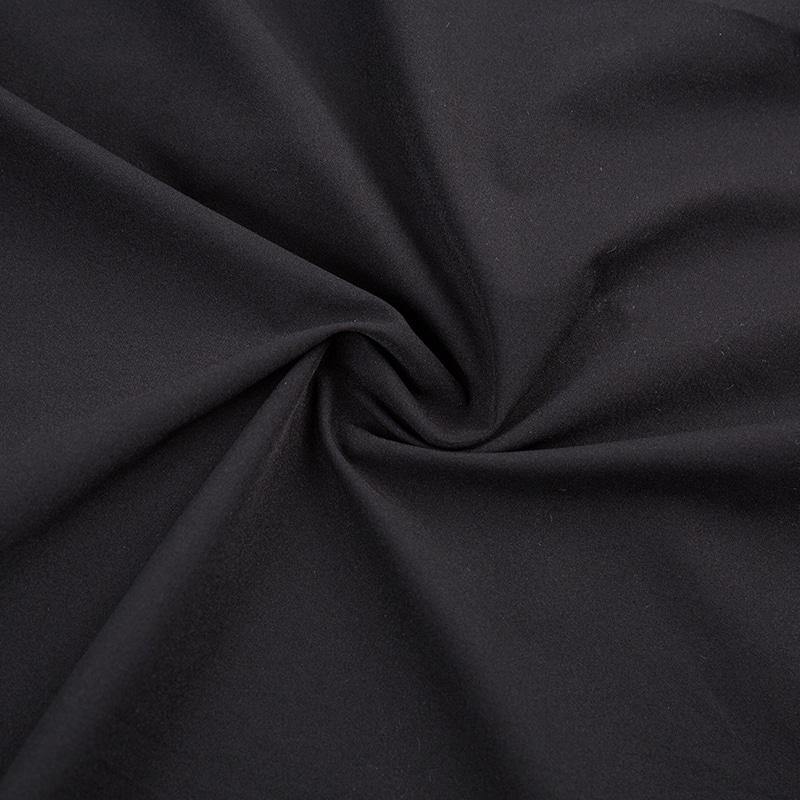
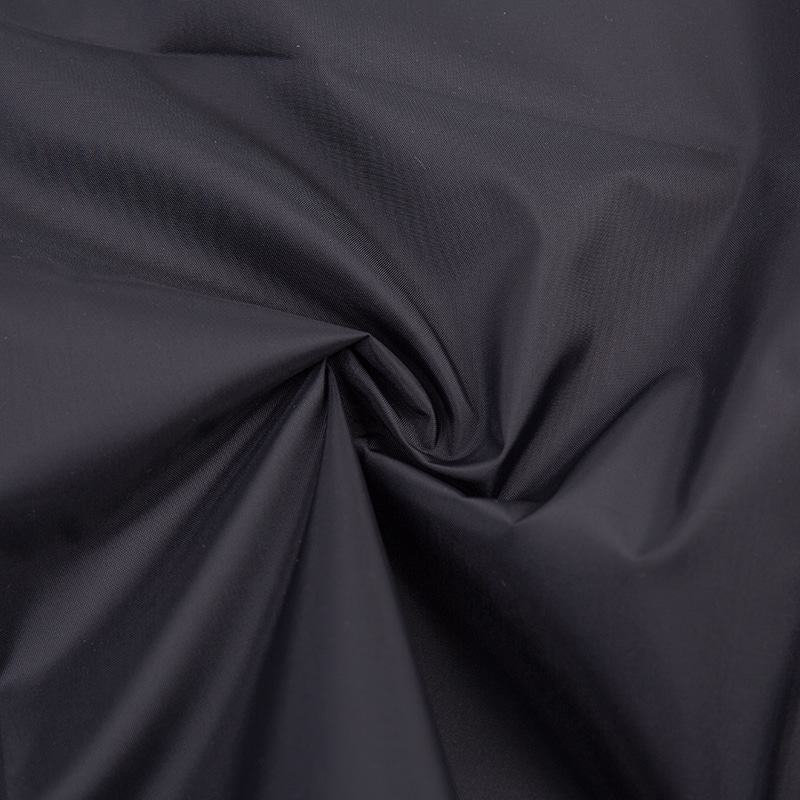
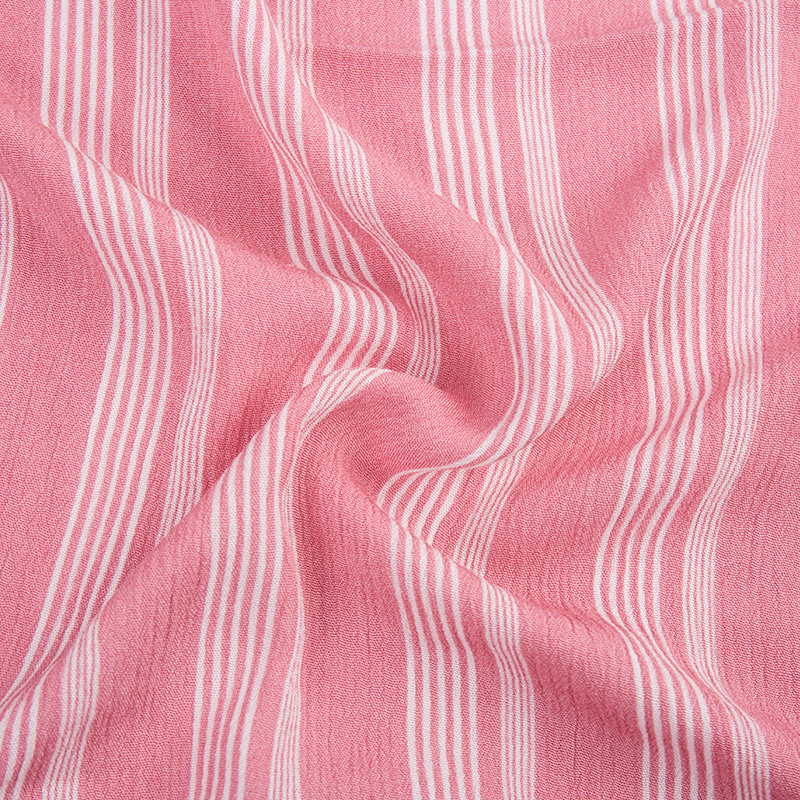
Four way stretch elastic fabric has transcended its performance-wear origins to become a cornerstone of modern fashion. By delivering 360° mobility and superior shape retention, it enables designers to merge structure with fluidity, meeting consumer demand for clothing that adapts to movement without compromising silhouette.
1. The Elasticity Advantage: Redefining Wearable Comfort
Traditional woven fabrics offer structure but restrict motion. Four-way stretch materials incorporate elastomeric fibers in both warp and weft directions, achieving elastic recovery rates above 92% in standard testing. This means garments retain their original shape even after repeated stretching, a critical factor for both durability and aesthetic consistency.
Unlike two-way stretch (which moves only horizontally or vertically), four-way stretch enables diagonal and rotational freedom. This is particularly valuable in applications ranging from tailored blazers to high-performance athleisure, where the fabric must follow complex body kinematics.
Key Mechanical Properties
- Elongation at break: Typically 120–180% in both directions, allowing substantial give during movement.
- Recovery angle: Over 88% after 30 minutes of relaxation, ensuring minimal bagging at knees and elbows.
- Dimensional stability: Shrinkage below 3% after industrial washing, critical for garment consistency.
2. From Sportswear to Mainstream: Market Penetration Data
The adoption of four-way stretch fabrics has expanded significantly beyond activewear. According to industry sourcing reports, the global demand for elastic woven fabrics grew by 11.3% year-over-year in 2025, with four-way stretch variants accounting for over 62% of new collection developments among mid-to-large apparel brands.
This shift is driven by consumer preference for clothing that supports dynamic lifestyles. In a recent survey of 1,400 buyers, 78% ranked “freedom of movement” as a top-three purchase criterion, ahead of fabric weight or surface texture.
Adoption by Category
| Category | Four-Way Stretch Penetration (2025) | Projected Growth (2026–2028) |
| Tailored Suiting | 34% | +18% CAGR |
| Casual & Denim | 47% | +12% CAGR |
| Outerwear | 28% | +15% CAGR |
| Athleisure | 89% | +7% CAGR |
3. Technical Considerations for Sourcing Four-Way Stretch
For procurement professionals and textile engineers, not all four-way stretch fabrics are equal. The interplay between fiber composition, weave construction, and finishing processes determines performance outcomes. Below is a practical framework for evaluating suppliers and materials.
Critical Evaluation Parameters
- Elastane content: Optimal range is 12–18%. Below 10% yields insufficient recovery; above 20% may compromise fabric stability and pilling resistance.
- Weave architecture: Plain weaves offer better breathability; twill weaves enhance drape and reduce shine – a key factor for formal wear.
- Finishing treatments: Anti-slip finishes improve seam strength, while mechanical compaction reduces residual shrinkage to under 2%.
Recommended testing protocol: Request AATCC 135 for dimensional change, ASTM D2594 for stretch/recovery, and Martindale abrasion results exceeding 40,000 cycles for high-wear applications.
4. Design Freedom: How Stretch Enables New Silhouettes
Four-way stretch fabrics empower designers to experiment with fitted cuts that previously required zippers or elastic waistbands. The fabric’s ability to conform to body contours while maintaining surface smoothness has given rise to “soft tailoring” – a trend that merges traditional construction with stretch comfort.
Notably, 68% of fashion design houses surveyed in 2025 reported using four-way stretch in at least one core collection piece, up from 41% in 2023. Applications range from sculptural dresses with no side seams to men’s trousers that retain a crease while allowing full squat mobility.
Comparative Design Capabilities
| Fabric Type | Mobility Score (1–10) | Shape Retention | Drape Quality |
| Four-Way Stretch Woven | 9.2 | Excellent | High |
| Two-Way Stretch Woven | 6.5 | Good | Moderate |
| Non-Stretch Woven | 3.0 | Very Good | Variable |
| Knit Jersey | 8.5 | Moderate | Soft |
5. Processing Workflow: From Fiber to Finished Fabric
Understanding the production sequence helps buyers identify quality control checkpoints. The flowchart below outlines the standard route for high-grade four-way stretch woven fabrics, from yarn preparation to final inspection.
Critical control points: Stentering temperature (typically 185–195°C) and dwell time directly affect elastic recovery. Insufficient heat-setting leads to progressive stretching, while overheating degrades elastane – a balance that separates premium mills from commodity producers.
6. FAQ: Common Questions from Buyers
- Q: Can four-way stretch fabrics be used for formal tailoring?
Yes, with proper finishing and yarn selection (e.g., wool-blend stretch suiting), they offer a crisp hand and full mobility, increasingly adopted for business travel wear. - Q: How does four-way stretch affect breathability?
Permeability depends on weave density and fiber denier. Open weaves with micro-porous yarns can achieve moisture vapor transmission rates above 5,000 g/m²/24hr, suitable for activewear. - Q: What is the typical minimum order quantity for custom development?
Most manufacturers require 1,000–3,000 meters per color for custom warp-dyed or piece-dyed stretch fabrics, though sample lots (200–500m) are available for trial. - Q: Are these fabrics suitable for digital printing?
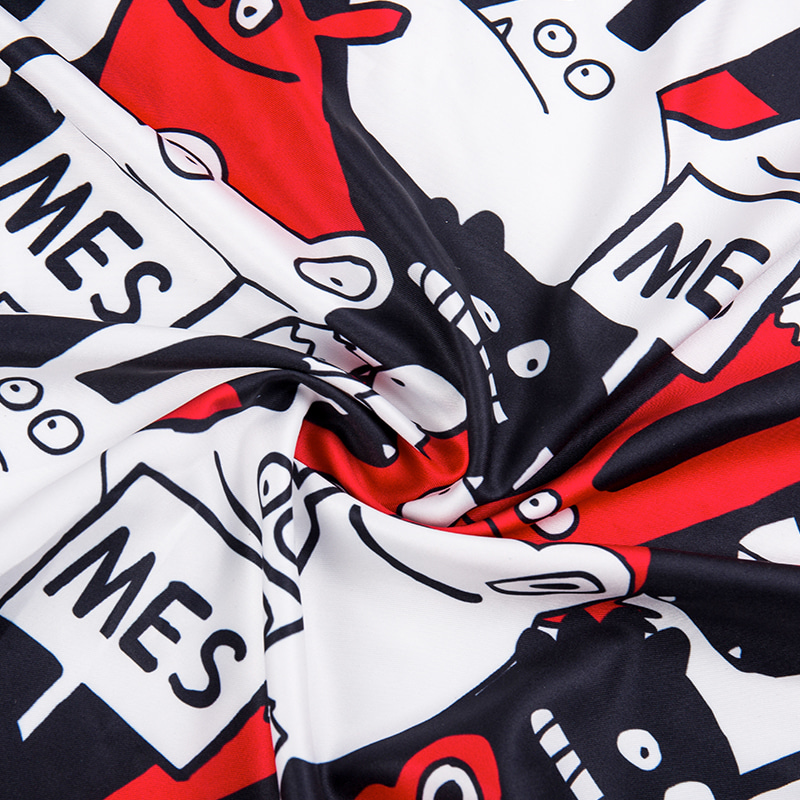
Yes, but pre-treatment must accommodate elastane content. High-temperature fixation may affect elasticity, so low-temperature disperse or pigment inks are recommended.


 苏公网安备32050902101422