Why Buyers Source Nylon Oxford Weave Fabric From Specialized Manufacturers
 Home / News / Industry news / Why Buyers Source Nylon Oxford Weave Fabric From Specialized Manufacturers
 2026.10.22
 Industry news
Most sourcing teams discover quickly that the phrase nylon oxford weave fabric manufacturers returns hundreds of near-identical pages. The real differentiation sits behind the listing: whether the supplier owns looms, controls dye lots, and can hold a denier tolerance across a 20,000-meter order. A mill that weaves its own greige fabric answers technical questions in minutes. A trader forwards them and returns a day later with a price that already carries a margin layer.
This guide is written for procurement staff, product developers, and sourcing managers who need to separate weaving mills from middlemen before the first sample is cut. It covers specification ranges, application fit, coating options, quality control signals, and the commercial terms that determine whether a bulk order ships on schedule.
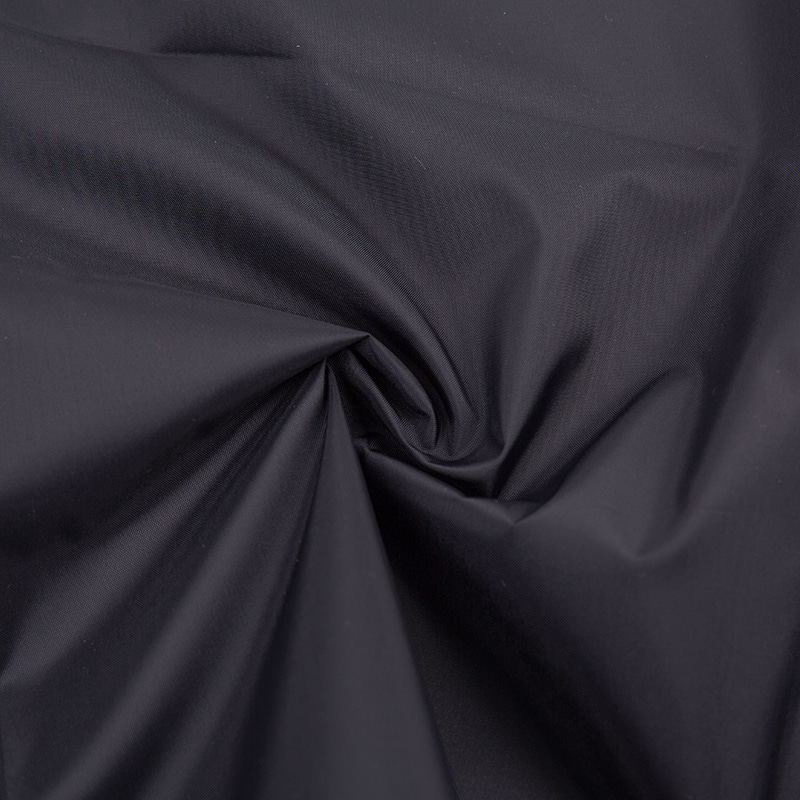
Oxford weave produces a basket-like structure with two warp yarns crossing two weft yarns in a repeating pattern. The result is a fabric with high dimensional stability, a visible grid texture, and tear resistance that plain weave cannot match at the same weight. When the yarn is nylon rather than polyester, the advantage compounds.
Polyester retains an edge in UV stability and cost per meter. For applications exposed continuously to sunlight without a coating, that trade-off is worth evaluating. For coated bags, tactical webbing, and workwear, nylon oxford usually wins on durability per gram.
A practical rule used by many product developers: specify nylon oxford when the failure mode is tearing or abrasion, and polyester oxford when the failure mode is prolonged UV exposure on an uncoated surface.
Specification sheets vary between mills, so the table below reflects the ranges a buyer should expect to see confirmed in writing. Any supplier unable to state MOQ and lead time on the same document is likely reselling.
| Specification | Standard Range | Notes for Buyers |
|---|---|---|
| Material | 100% Nylon (PA6 / PA66) | PA66 offers slightly higher heat resistance; confirm which polymer is quoted. |
| Denier | 210D / 420D / 600D / 1000D / 1680D | Higher denier increases weight and abrasion resistance. |
| Weave | Oxford weave / Ripstop available | Ripstop grid interrupts tear propagation for tactical and outdoor use. |
| Coating | PU / PVC / PA / Water repellent | Coating adds weight and changes hand feel; specify grams of coating. |
| Width | 150cm / 160cm | Confirm usable width after coating and trimming. |
| Weight | 80-400 g/m² | Weight depends on denier plus coating pickup. |
| MOQ | 1000m per color | Negotiable for sampling and trial orders. |
| Lead Time | 25-35 days after deposit | Peak season scheduling should be confirmed in writing. |
Denier measures yarn linear density, not fabric weight. A 420D oxford woven at low density can weigh less than a tightly woven 210D oxford. Buyers should request both the denier and the finished grams per square meter, plus the coating pickup weight, before approving a sample. Mills that quote only denier are omitting the variable that most affects cost.
Application determines denier, coating type, and finish. The matrix below maps common end uses to workable specifications.
| Application | Typical Denier | Coating | Why Nylon Oxford Fits |
|---|---|---|---|
| Bags and luggage | 1000D / 1680D | PU or PVC backing | High abrasion resistance at seams and corners. |
| Outdoor and tents | 210D-420D | PU waterproof | Lightweight shell with reliable hydrostatic head. |
| Workwear and jackets | 210D | PA or water repellent | Soft hand feel with tear strength for daily wear. |
| Tactical and military gear | 500D-1000D ripstop | PU or FR finish | Ripstop grid limits tear propagation in the field. |
| Industrial covers | 420D-600D | PVC or PU | Dimensional stability under repeated flexing. |
Coating transforms oxford from a durable woven shell into a barrier fabric. The choice of coating chemistry affects waterproofing, breathability, hand feel, and cost. Buyers should specify coating type and pickup weight together, because a 1000D fabric with a light PA finish and the same fabric with a 40 g/m² PU backer behave like different products.
A coated fabric's water resistance is usually expressed as hydrostatic head in millimeters. Tent and cover fabrics commonly target 1500mm to 3000mm, while heavy-duty bags may use lower ratings because water exposure is intermittent. Buyers should request the test method alongside the rating, since results differ between static and dynamic test procedures.
Custom programs separate serious buyers from spot purchasers. The process below reflects a typical mill workflow, and each stage carries a defined cost and timeline that should be quoted upfront.
| Customization | Options | Typical Sampling Time |
|---|---|---|
| Color | Color card selection or lab dip against a submitted sample | 3-7 days |
| Coating | PU white, transparent, silver, flame retardant, anti-UV | 5-10 days |
| Surface effect | Printing, embossing, calendering | 7-12 days |
| Packing | Roll length, core size, labels, poly bag or woven bag | Confirmed at order stage |
Sample fees are often credited against the first bulk order. Buyers should confirm this in writing before paying, since policies differ between mills.
Color consistency and tensile performance are the two areas where offshore sourcing most often goes wrong. A mill with in-house testing can show records; a reseller can only show promises.
Batch-to-batch color variation is normal in dyeing. The control question is whether the mill measures and documents the variation. A workable process includes incoming yarn checks, dye-lot tracking, spectrophotometer readings against the approved standard, and a final inspection that compares rolls within the shipment as well as against the standard. Buyers should ask for the acceptable color difference tolerance in writing before production begins.
Third-party inspection through established testing organizations can be arranged on request for buyers who require independent verification. The cost is usually borne by the buyer and should be scheduled before shipment rather than after arrival.
Price alone does not indicate a competitive offer. The five figures below determine total landed cost and schedule risk.
| Term | What to Confirm | Why It Matters |
|---|---|---|
| MOQ | Meters per color and per order | Low MOQ may carry a higher unit price. |
| Lead time | Days after deposit, plus peak season caveat | Determines retail launch timing. |
| Payment terms | Deposit percentage and balance trigger | Affects cash flow and risk exposure. |
| Sample policy | Free or paid, freight responsibility | Sets the cost of evaluating a new supplier. |
| Tolerance | Weight, width, and color difference ranges | Prevents disputes at inspection. |
Buyers comparing quotes should normalize all five figures before deciding. A quote with a 20-day lead time and a 2000m MOQ is not comparable to a 35-day quote with a 1000m MOQ unless volume and schedule are fixed.
Nylon oxford generally offers higher tensile and tear strength, greater elongation before break, and a softer hand at the same denier. Polyester oxford costs less and holds up slightly better under prolonged uncoated UV exposure. For coated bags, tactical gear, and abrasion-prone uses, nylon is usually the stronger choice.
Most mills set MOQ at around 1000 meters per color for custom dyeing and coating. Sampling and trial orders can often be negotiated below that level, sometimes with a surcharge or a sample fee credited against the bulk order.
Many manufacturers provide free sample swatches or short yardage for evaluation, with the buyer covering freight. Custom-colored or custom-coated samples usually carry a fee. Confirm the sample policy and freight terms before requesting.
A standard lead time of 25 to 35 days after deposit is common for repeat specifications. Custom colors, special coatings, and peak season scheduling can extend that window, so the production calendar should be confirmed in writing at order placement.
Yes. PU coating is available in white, transparent, and silver variants, and hydrostatic head ratings can be specified to the application. Buyers should request the rating and the test method together, since ratings are not directly comparable across different test procedures.
Request a lab dip against the approved color reference, then approve a production sample from the actual dye lot. Ask for the color difference tolerance in writing and for spectrophotometer readings at final inspection. Comparing rolls within the shipment, not only against the standard, catches batch variation early.
Luggage typically uses 1000D to 1680D for abrasion resistance at corners and seams. Apparel shells and linings usually use 210D to 420D, where a softer hand and lighter weight matter more than maximum tear strength.
The fastest path from evaluation to production is a complete brief. Send denier, coating type and pickup weight, width, quantity per color, and target application. A mill that weaves in-house can typically return a quotation within 24 hours and arrange sample yardage for qualified buyers.
Include these five details in the first message:
Free samples are available for serious buyers; freight is typically at the buyer's cost.

Canxing Textile Building, No.458Dongxin Road, Shengze Town, Wujiang District, Suzhou City, Jiangsu Province, China

+86-18816291909

+86-512-63620515

Crystal@canxingtex.com

Copyright © Wujiang Canxing Textile Co,.Ltd. Rights Reserved. Custom Elastic Woven Fabrics Manufacturers
Privacy 苏公网安备32050902101422


 English
 русский
 中文简体
 عربى