Why Polyester-spandex Beach Pants Fabric Is Becoming the Smart Choice for Beachwear Brands
 Home / News / Industry news / Why Polyester-spandex Beach Pants Fabric Is Becoming the Smart Choice for Beachwear Brands
 2026.11.20
 Industry news
Beachwear fabric has to handle a hostile environment. Salt water, sand, UV exposure and repeated washing all wear down materials that look perfect on the cutting table. For brands and garment factories, the fabric choice often decides whether a beach pant holds its shape after its tenth wash or ends up as a returned item. Polyester-spandex beach pants fabric has become one of the most practical answers to this problem, combining a quick-drying surface, stretch recovery and a clean visual finish.
Beach pants face a combination of stresses that ordinary casual trousers never encounter. The wearer may spend hours in salt water, then walk across sand, sit on hot surfaces and rinse the garment in fresh water before it dries. Each stage influences how the fabric behaves over the life of the product.
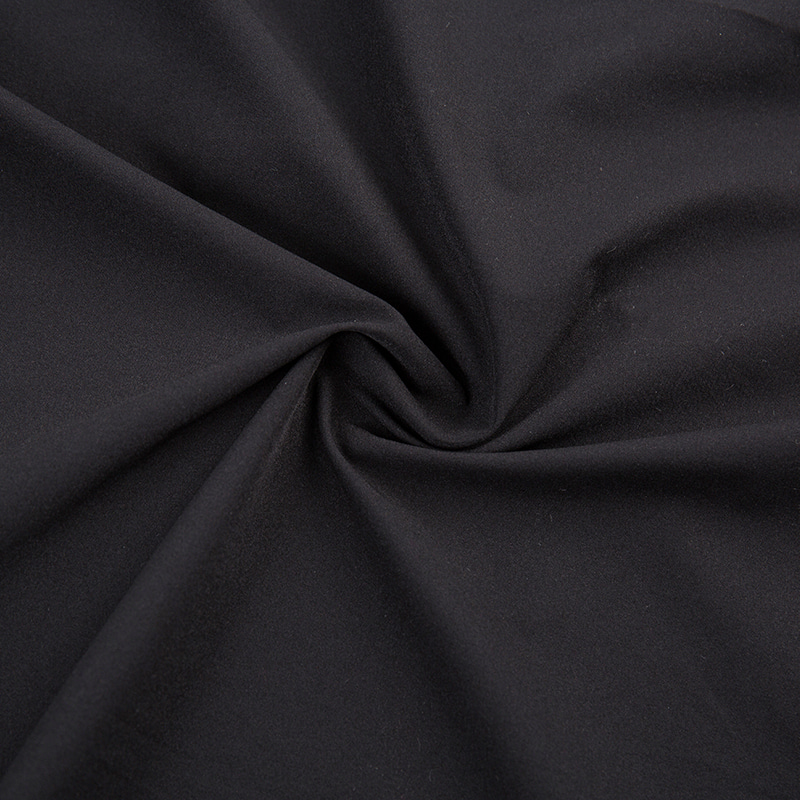
A well-engineered polyester-spandex beach pants fabric uses polyester as the structural backbone and wraps spandex filament inside the yarn system to deliver stretch without sacrificing dimensional stability. The result is a woven textile that moves with the wearer, recovers its shape and dries far faster than cotton-based alternatives. Many mills also apply a water-repellent finish, which helps the surface shed moisture quickly and supports a quick-dry performance profile.
The polyester component provides dimensional stability, abrasion resistance and fast moisture release. The spandex component, usually encapsulated within the filament structure, provides elastic recovery. Together, these fibers create a fabric that stays controlled during movement while resisting the sagging that affects lighter stretch textiles.
A fabric designed for coastal wear is judged less by its first-day appearance and more by how it recovers after weeks of immersion, rinsing and drying cycles.
Specification sheets are the fastest way to compare suppliers. For polyester-spandex beach pants fabric, the most useful data points are yarn construction, fabric weight, weave type and finishing options. A typical production range sits between 160 and 175 gsm, a weight that balances drape with a light, breathable hand-feel.
| Parameter | Typical Option | Buyer Relevance |
|---|---|---|
| Yarn construction | 70D + 40D x 70D + 40D + 100D | Determines strength and surface smoothness |
| Fabric weight | 160 to 175 gsm | Affects drape, opacity and comfort |
| Weave type | Woven structure | Supports wrinkle resistance and shape retention |
| Finishing | Water-repellent, quick-dry treatment | Speeds drying and reduces water retention |
| Color effect | Two-tone dyeing option | Adds visual depth without extra print steps |
Beyond raw performance, the fabric offers production advantages. Its stable structure simplifies cutting and sewing, and its consistent surface helps maintain color uniformity across large batches. Brands that sell both domestic and export lines can use one base fabric for multiple seasonal colorways.
Water-repellent finishing helps moisture leave the surface faster, reducing the damp feeling after swimming or rain.
The woven structure resists creasing, so garments look cleaner straight out of the bag.
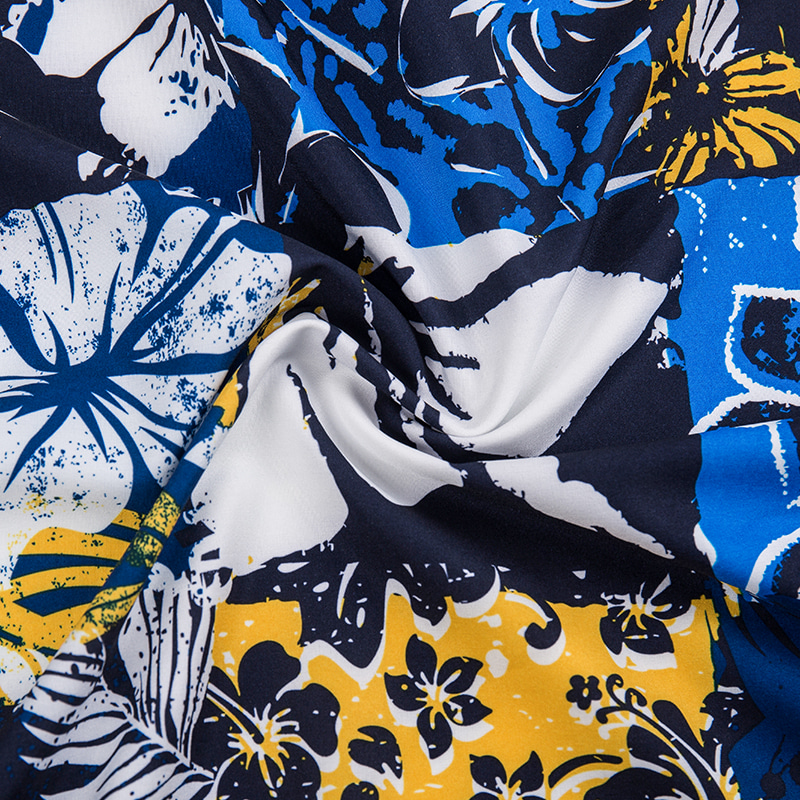
Specialized dyeing creates a layered color look that adds visual interest to plain cuts.
A smooth surface reduces skin irritation during long wear in warm conditions.
Selection depends on priorities. Pure polyester offers excellent durability and low cost but lacks stretch. Nylon four-way stretch fabrics deliver softness and high elasticity but often cost more and may show faster surface wear. Cotton blends feel natural but dry slowly. A polyester-spandex woven construction sits in a practical middle ground, offering balanced stretch, quick drying and stable appearance at a competitive cost.
| Criteria | Pure Polyester | Nylon Stretch | Cotton Blend | Polyester-spandex |
|---|---|---|---|---|
| Quick drying | Strong | Moderate | Weak | Strong |
| Stretch | Limited | High | Low to moderate | High |
| Cost level | Low | Higher | Moderate | Moderate |
| Salt water tolerance | Strong | Moderate | Weak | Strong |
For brands planning a broad beach collection, the most efficient route is often to standardize on a single high-performing base fabric and differentiate through color and finishing. You can review the full range of options for beach trousers in our polyester-spandex beach pants fabric collection.
A competitive price means little if the fabric fails in production or in the market. Use the checklist below to qualify any supplier before committing to bulk orders.
Order at least two sample rounds. The first confirms the hand-feel and color, while the second validates the finished garment after cutting, sewing and washing. Brands that skip the second round often discover fit or shrinkage problems only after the first shipment arrives.
Custom development allows brands to tailor weight, color and finishing to their market. A capable mill should support adjustments to fabric weight within the target range, custom color matching and specialized finishing such as water repellency or distinctive dyeing effects. Integrated producers that control both yarn sourcing and weaving can also offer more consistent lead times.
When evaluating custom programs, request a written development plan that includes sampling stages, color approval points and finishing test standards. This keeps expectations aligned and reduces revision cycles.
Yes. The finish reduces water absorption at the surface, so moisture beads up and leaves more quickly. Drying speed still depends on humidity, airflow and garment construction, but the difference is noticeable compared with untreated cotton blends.
Most beach pant programs use a weight between 160 and 175 gsm. This range provides enough body for clean drape while keeping the garment light enough for warm climates.
Yes. Color matching, two-tone dyeing effects and finishing adjustments are common requests. Development time depends on the complexity of the color and the chosen treatment, so early planning helps shorten lead times.
Request a sample with the target gsm, color approval, test reports for finishing performance and any sustainability certifications required by your market. Confirm minimum order quantities and sampling timelines in writing.
If you are developing a beach trouser collection, the right fabric decision will shape comfort, durability and production efficiency for the entire line. Share your target gsm, color direction and market requirements with a supplier to receive a tailored quotation and sample plan. For detailed specifications and sourcing options, visit the polyester-spandex beach pants fabric product page to request samples and pricing.

Canxing Textile Building, No.458Dongxin Road, Shengze Town, Wujiang District, Suzhou City, Jiangsu Province, China

+86-18816291909

+86-512-63620515

Crystal@canxingtex.com

Copyright © Wujiang Canxing Textile Co,.Ltd. Rights Reserved. Custom Elastic Woven Fabrics Manufacturers
Privacy 苏公网安备32050902101422


 English
 русский
 中文简体
 عربى