Compression Spandex Fabric: High Stretch Recovery Guide for Performance Wear
 Home / News / Industry news / Compression Spandex Fabric: High Stretch Recovery Guide for Performance Wear
  2026.10.01
 Industry news
Compression spandex fabric is engineered to do more than stretch. It must apply controlled pressure, return to shape, and maintain that behavior through repeated wear and washing. For brands and manufacturers, high stretch recovery is the difference between a garment that supports the body and one that sags after a few hours.
Many fabric specifications focus on stretch percentage because it is easy to measure. Recovery is harder to see in a sample swatch, yet it determines fit, support, and durability. A fabric that extends 120 percent but grows permanently after five cycles will fail in leggings, medical stockings, or performance tops.
This article explains the fiber, structure, testing, and production decisions that create reliable compression spandex fabric with high stretch recovery. It is written for product developers, sourcing teams, and technical designers who need practical criteria rather than vague claims.
Stretch is the ability to extend under force. Recovery is the ability to return to original dimensions after that force is removed. In compression fabrics, recovery also includes the ability to maintain pressure without becoming loose, hard, or permanently deformed.
High stretch recovery usually involves four measurable ideas:
These properties interact. A fabric can have high stretch but poor recovery, or strong compression with low comfort. The best specification balances stretch, recovery, modulus, weight, and hand feel.
| Performance factor | What it controls | Practical target |
|---|---|---|
| Stretch ratio | Range of movement | 80 to 150 percent for active compression |
| Recovery after cycling | Shape retention | 95 percent or higher after five cycles |
| Residual growth | Bagging and sagging | Below 5 percent |
| Modulus | Compression feel | Stable force across garment zones |
| Hysteresis | Energy loss | Low enough for consistent support |
| Weight | Pressure and opacity | 180 to 320 gsm for many compression knits |
In compression spandex fabric, the word high should always be tied to a test method and a garment use. Without that context, high stretch recovery is only a marketing phrase.
Raw stretch impresses in a hand-pull test. Recovery determines what happens in the real garment. When recovery is weak, the fabric may feel elastic in the sample room but fail after the first wear. Common failures include baggy knees, loose waistbands, rolled hems, seam grin, and loss of support.
In compression apparel, recovery affects:
A fabric with moderate stretch and excellent recovery often performs better than a fabric with extreme stretch and poor return. Designers should test recovery after cycling, not only after a single extension. They should also test the finished garment, because seams, adhesives, and pattern tension can change how the fabric behaves.
The central rule is simple: stretch sells the first sample, recovery keeps the garment in service.
Spandex, also called elastane, provides the elastic core in most compression fabrics. Its polymer segments allow large extension and rapid return. The key variables are denier, content, and how the spandex is combined with the main yarn.
Lower denier spandex, such as 20 to 40 denier, gives a finer hand and lighter compression. Higher denier, such as 55 to 70 denier, provides more power and better shape retention, but it can feel coarser and may increase cost. Spandex content often ranges from 10 to 25 percent in compression knits. However, higher content is not automatically better. The structure, yarn count, and finishing must support the spandex.
 Nylon Four-way Stretch Fabric SuppliersWhat Do Buyers Need to Know Before Purchasing Four-Way Stretch Polyester Fabric? Industry news 2026-09-18 What Is Polyester Four-Way Stretch Fabric and Why Does It Mat...View Product →
A well-designed elastic fabric uses spandex tension and heat setting to create a stable recovery platform. If the spandex is overstretched during production, the fabric may look correct in the roll but lose recovery after washing.
Nylon spandex and polyester spandex both support compression, but they behave differently.
| Factor | Nylon spandex | Polyester spandex |
|---|---|---|
| Hand feel | Softer, smoother | Crisper, more synthetic |
| Strength and abrasion | High | High, often better in dry abrasion |
| Moisture | Moderate | Low absorbency, quick drying |
| Chlorine and UV | More sensitive to chlorine | Better UV and chlorine resistance |
| Color | Excellent dyeability | Good, depending on dye process |
| Cost | Usually higher | Usually lower |
| Typical use | Swimwear, shapewear, soft compression | Sportswear, medical garments, outdoor compression |
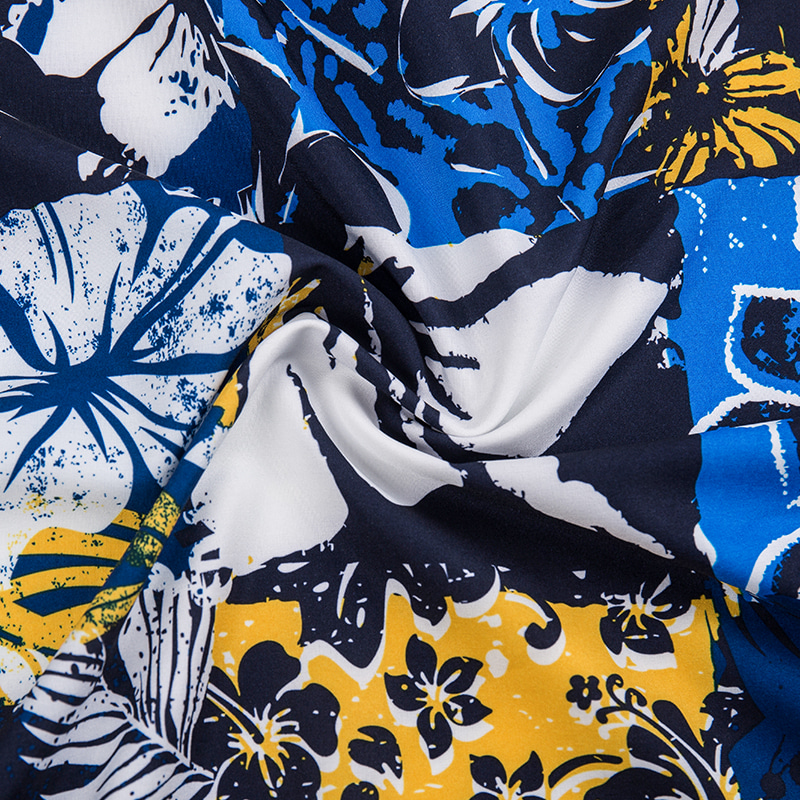 Polyester Four-Way Stretch Fabric SuppliersFour-way stretch fabric is a type of fabric that has elasticity in all directions, with its main components being spandex (also known as elastane or Lycra) and polyest...View Product →
Nylon spandex is often chosen when softness and stretch recovery are priorities. Polyester spandex is preferred when durability, UV resistance, and color stability matter. The right choice depends on the garment environment, not on a general ranking.
Some programs avoid spandex because of chlorine, heat, or long-term aging concerns. Non-spandex high stretch filaments, including bicomponent polyester and T800 style yarns, can provide excellent stretch and recovery without elastane. These fabrics may offer better resistance to chlorine and heat, and they can be recycled more easily in some streams.
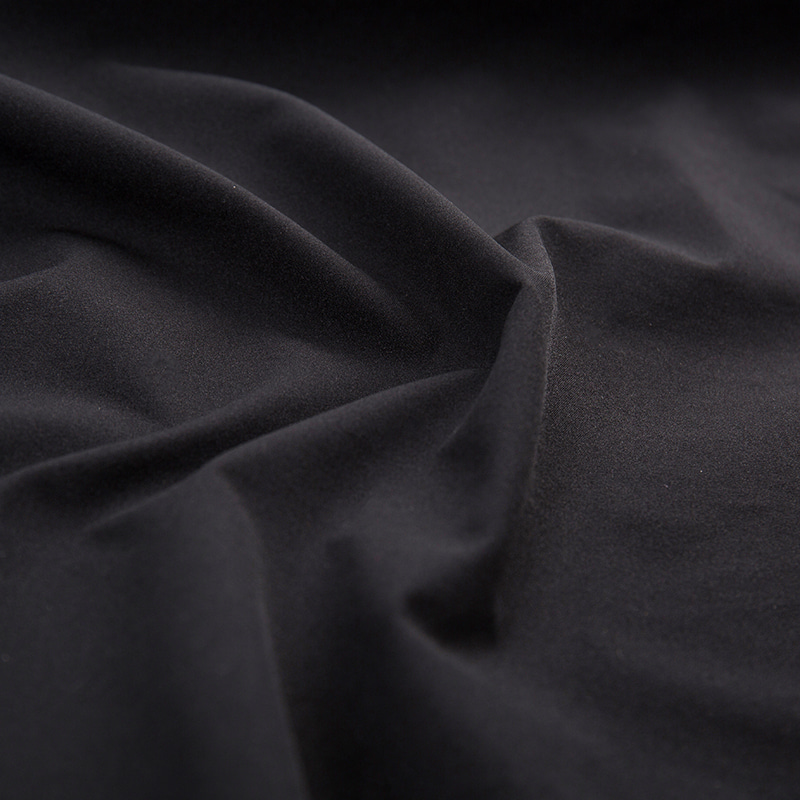 T800 Non-Spandex Stretch Fabric50D*50D/90GSM-100GSMView Product →
They are not identical to spandex. Their compression profile may feel firmer or less soft, and design teams must test recovery with the same discipline used for spandex fabrics. For swimwear, medical wear, and long-life activewear, they can be a strong technical option when the specification is built around the final use.
Fabric structure translates fiber properties into compression behavior. A knit can be engineered with loops, tucks, and missed stitches to create zones of different stretch. A woven fabric can use core-spun elastic yarns in warp and weft to achieve four-way stretch with a more stable, less curly edge.
The main structural choices include:
Gauge, density, and stitch design matter. A tighter structure can improve support but reduce breathability. An open structure can improve airflow but may lose compression. Product developers should map compression zones before choosing a single fabric. A waistband, knee panel, and back panel may need different stretch and recovery profiles.
Testing high stretch recovery requires more than a single stretch reading. A practical test plan includes:
| Test area | What to check | Target direction |
|---|---|---|
| Cyclic extension | Recovery after repeated stretching | 95 percent or higher after five to ten cycles |
| Residual growth | Permanent deformation | Below 5 percent |
| Modulus | Force at defined extension | Consistent across lots |
| Compression | Pressure on curved body form | Stable after 30 minutes |
| Shrinkage | Dimensional change after washing | Low and repeatable |
| Colorfastness | Bleeding and fading | Meets garment care claims |
| Pilling and abrasion | Surface durability | Suitable for end use |
Test samples should be conditioned and tested in both directions. For compression garments, flat fabric tests are only the beginning. Garment-level tests on a mannequin or pressure mapping system reveal how seams, panels, and pattern tension affect recovery. Buyers should request production-lot data, not only development samples.
Every production step can damage recovery. During knitting, yarn tension must be controlled so the spandex is not overstretched. During dyeing, excessive tension, high temperature, and long dwell time can age the elastane. Heat setting stabilizes the fabric, but it must be controlled within the fiber tolerance. If the fabric is set too cool, it may shrink later. If it is set too hot, it may lose elasticity.
Cutting and sewing can also reduce recovery. Patterns must allow for stretch and recovery, especially in compression zones. Needles, stitches, and thread tension should be selected for elastic fabrics. Bonded seams and tapes need compatible stretch so they do not lock the fabric.
A supplier scorecard should include more than price and lead time. For compression spandex fabric, evaluate fiber and yarn traceability, stretch and recovery testing, lot consistency in weight and width, pilot-run capacity, and communication during sampling and corrective action.
A strong technical partner can explain why a fabric behaves as it does, not only quote a stretch number. Wujiang Canxing Textile's fabric development and production capability can support programs that need woven elastic and high stretch fabrics with disciplined sample-to-bulk control.
Different garments put different demands on compression spandex fabric.
| Application | Recovery priority | Fabric focus |
|---|---|---|
| Sportswear | High | Breathability, modulus stability, quick drying |
| Medical compression | Very high | Consistent pressure, low growth, skin comfort |
| Shapewear | High | Smooth hand, opacity, zone control |
| Swimwear | High | Chlorine resistance, UV stability, soft recovery |
| Outdoor and cycling | High | Abrasion resistance, UV, panel stability |
| Beachwear and shorts | Moderate to high | Stretch comfort, light compression, soft hand |
In summer garments, stretch recovery supports movement and helps shorts keep their shape after swimming, sitting, and walking. The same principle applies to beachwear and casual shorts, where elastic fabrics must combine comfort with reliable return. For more on stretch comfort in summer garments, see this discussion of beach pants fabric elasticity.
It means the fabric returns close to its original dimensions after being stretched, often at least 95 percent after repeated cycles. It also means the garment keeps steady compression instead of becoming loose.
No. More spandex can increase power, but recovery depends on yarn quality, fabric structure, heat setting, and garment construction. Excessive spandex can also make the fabric harder to process and less comfortable.
Use cyclic extension tests, measure residual growth, and test after washing. For compression garments, test finished seams and panels because construction can change recovery.
Yes. Woven four-way stretch fabrics use elastic yarns in warp and weft. They offer firm support and clean tailoring, which is useful for structured panels and performance garments.
Heat, chlorine, harsh detergents, and mechanical action can age elastane. Proper care and a well-controlled dyeing and finishing process reduce this decline.
Residual growth is the permanent increase in fabric dimensions after stretching or washing. Low residual growth is critical for compression garments because it prevents sagging and loss of support.
Define the test method, number of cycles, extension level, conditioning time, and acceptable growth limit. Also specify garment-level performance and care conditions.
Often yes. Gentle washing, low heat drying, and avoiding chlorine and fabric softeners can extend the life of the elastic fibers and preserve recovery.
Recommended Products

Canxing Textile Building, No.458Dongxin Road, Shengze Town, Wujiang District, Suzhou City, Jiangsu Province, China

+86-18816291909

+86-512-63620515

Crystal@canxingtex.com

Copyright © Wujiang Canxing Textile Co,.Ltd. Rights Reserved. Custom Elastic Woven Fabrics Manufacturers
Privacy 苏公网安备32050902101422



 English
 русский
 中文简体
中文简体 عربى
عربى