How Polyester Elastane Spandex Activewear Fabric Performs in Modern Sportswear
 Home / News / Industry news / How Polyester Elastane Spandex Activewear Fabric Performs in Modern Sportswear
 2026.10.29
 Industry news
Polyester elastane spandex activewear fabric is a family of materials rather than a single recipe, and the terminology overlaps in ways that create confusion during sourcing. Elastane and spandex describe the same polyurethane-based elastic fiber. The United States market favors spandex, while European and many Asian markets use elastane. Polyester supplies the structural, moisture-moving backbone. A specification written in one region may use different words from a specification written in another, yet describe nearly identical performance.
Because activewear sits close to the body, stretches through repeated cycles, and faces sweat, heat, and frequent laundering, the interaction between polyester and the elastic component matters more than the headline fiber content alone. This guide explains how the blend behaves in production, what to measure before committing to bulk, and where the material reaches its practical limits.
Few fiber combinations match the cost-to-performance ratio of polyester with a small percentage of elastane. Polyester contributes tensile strength, abrasion resistance, and a hydrophobic surface that releases water quickly. Elastane contributes the stretch and recovery that allow a garment to follow the body without sagging or bagging at the knees and elbows.
Practical range for activewear: elastane content between 8 and 20 percent by weight covers most training, compression, and swim programs. Below 8 percent, the fabric behaves more like a rigid knit. Above 20 percent, recovery gains flatten out while chlorine sensitivity and cost climb.
Polyester filament yarns determine how a knit holds shape, how it drapes, and how it wears. Textured yarns add bulk and cover, while flat filament yarns add smoothness and luster. When a buyer asks for a fabric that keeps its shape after twenty wash cycles, the answer usually lies in the polyester yarn structure and the knitting tension, not in the elastane percentage alone.
Elastane and spandex are not different fibers. Both describe a segmented polyurethane that can stretch to several times its original length and return to shape. In fabric construction, the fiber appears as bare yarn, covered yarn, or core-spun yarn, and each form changes how the finished fabric behaves.
The blend ratio sets the ceiling for stretch and the floor for aging risk. It also affects how the fabric feels against the skin and how it behaves during cutting and sewing.
| Elastane share | Stretch character | Typical garment use | Main risk |
|---|---|---|---|
| 5 to 8 percent | Light stretch, soft hand | Stretch shirts, casual trousers | Low recovery demand |
| 10 to 15 percent | High stretch, fast recovery | Leggings, training tops, cycling wear | Chlorine and heat aging |
| 18 to 25 percent | Strong compression, high extension | Compression and swim racing suits | Higher cost, shorter service life |
Fabric hand feel tells you very little about long-term performance. Three numbers matter most during a technical review: stretch percentage, growth after cycling, and recovery percentage. Stretch shows how far the fabric extends under a defined load. Growth shows how much length remains after the load is removed. Recovery shows how quickly the fabric returns to its original dimension.
Most training wear programs target growth below 8 percent and recovery above 90 percent after repeated cycles. Test conditions matter a great deal. A fabric tested at a low extension rate can look better than the same fabric tested under realistic garment strain.
| Property | Typical method | Target for training wear |
|---|---|---|
| Fabric weight | ASTM D3776 | 180 to 260 gsm |
| Stretch, length direction | ASTM D2594 | 80 to 130 percent |
| Growth after cycling | ASTM D2594 | 8 percent or lower |
| Recovery after cycling | ASTM D4964 | 90 percent or higher |
| Shrinkage after washing | AATCC 135 | 5 percent or lower |
| Pilling resistance | ASTM D4970 | Grade 3 to 4 or better |
| Colorfastness to perspiration | AATCC 15 | Grade 4 or better |
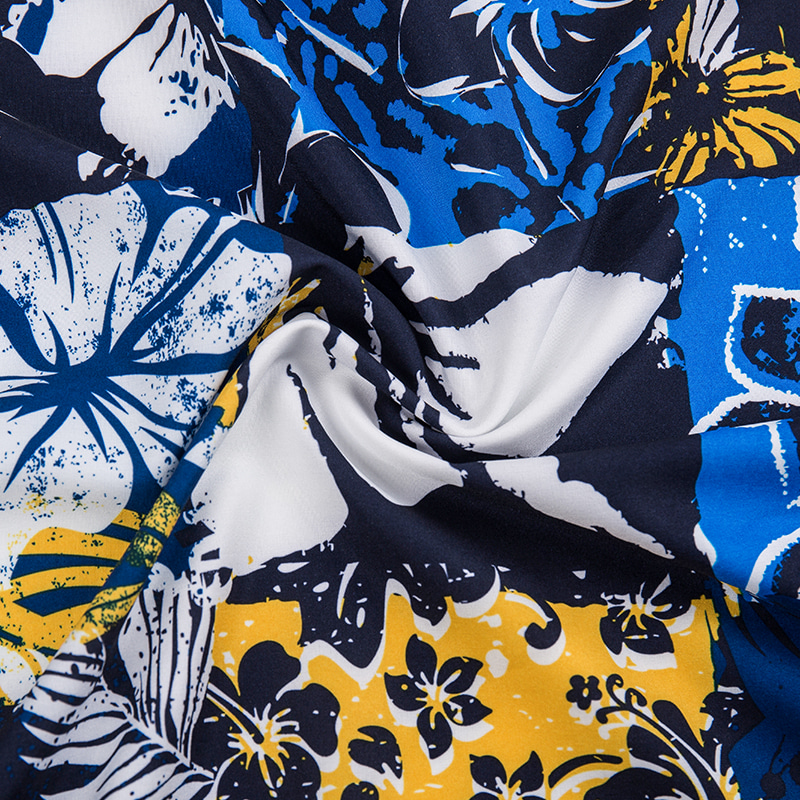 Custom Polyester Four-Way Stretch Fabric for Sportswear and TrousersFor sportswear and trousers needing stretch and recovery, this 100D polyester four-way stretch fabric combines durability, wrinkle resistance, and good drape.View Product →
Polyester is hydrophobic, so it does not absorb water into the fiber itself. Moisture moves along the surface of the yarns and through the spaces between them. Capillary channels form where filament yarns touch, and the size of those channels depends on yarn count, knitting structure, and finishing.
Hydrophilic finishing can accelerate spreading, but the effect fades with washing unless the finish is durable. For garments expected to survive many wash cycles, the knit architecture does more work than the surface chemistry.
Air permeability affects how quickly heat and vapor leave the garment. A tight interlock or double knit traps more warm air, which suits cold-weather training. An open mesh or single jersey moves air freely, which suits high-sweat activities. Typical targets range from roughly 50 to 300 cubic feet per minute when measured with a standard air permeability tester.
Elastane is usually the least durable component in an activewear blend. Chlorine from pools attacks the soft segments of the polymer and causes the fiber to lose recovery. Heat and ultraviolet light accelerate oxidation. Skin oils, sunscreen, and some fabric softeners also shorten service life.
When chlorine resistance or an unusually long service life is the priority, a fabric can create stretch through yarn structure instead of through elastane. Bi-component polyester yarns and high-crimp textured yarns can deliver useful stretch with better resistance to chlorine and heat.
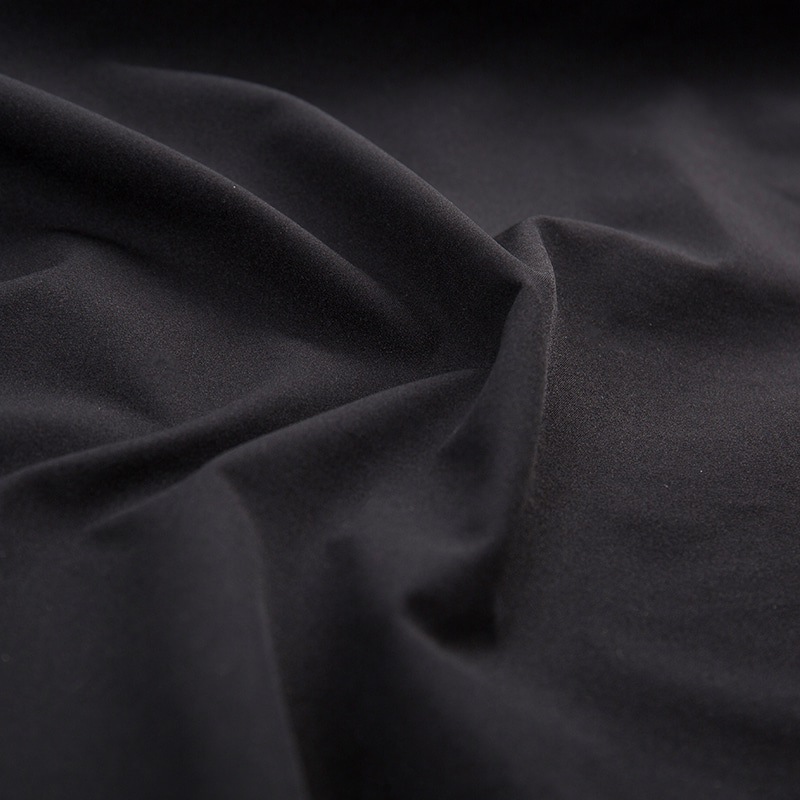 T800 Non-Spandex Four-Way Stretch FabricFor stretch programs considering non-spandex alternatives, this T800 PBT/PET fabric offers four-way stretch, good recovery, a cotton-like feel, and lasting dryness.View Product →
Before bulk production, a structured test sequence reduces the risk of a late-stage failure. Many failures trace back to a single unchecked variable, such as shrinkage after the first wash or recovery loss after repeated cycling. The following sequence works well for most polyester elastane spandex programs.
Understanding how polyester behaves under different use conditions helps set realistic targets for the whole test plan. A technical note on polyester durability under different usage conditions provides useful context for buyers who need to justify a specification to a brand team.
Training garments need high stretch, fast recovery, and reliable wicking. A circular knit between 150 and 220 gsm with 12 to 18 percent elastane suits leggings, fitted tops, and cycling wear. Compression garments push elastane content higher and use tighter knitting tensions to create graduated pressure across the body.
Leisure and resort programs balance stretch with hand feel. A softer polyester spandex shorts fabric with moderate stretch suits beachwear, swim cover-ups, and casual warm-weather garments. For swim, chlorine resistance becomes the deciding factor, and elastane content should be weighed against the expected number of pool exposures.
 Polyester and Spandex Blended Shorts Fabric for Beach PantsFor warm-weather shorts and resort wear, this polyester-spandex blend offers a smooth feel, breathability, drape, water repellency, and wind resistance.View Product →
For teams that need to match a fabric to a specific end use, production experience across multiple knit and woven categories is often as important as the fiber data sheet. Reviewing a supplier's manufacturing and development capability early in the project can prevent specification mismatches later.
A well-written purchase specification prevents most disputes. It also shortens sampling cycles because both sides measure the same properties in the same way.
Polyester elastane blends are difficult to recycle mechanically because the two polymers cannot be separated easily. Most collected activewear therefore moves to downcycling, incineration, or landfill. Recycled polyester content reduces the demand for virgin polymer, but it does not solve the separation problem at end of life.
Three practical directions reduce impact without changing the fundamental material:
Microfiber release during washing is another consideration. Lower mechanical action, shorter wash cycles, and washing bags reduce shedding, but the fiber blend itself remains the main constraint.
Yes. Elastane and spandex refer to the same polyurethane-based elastic fiber. The term spandex is common in the United States, while elastane is preferred in Europe and many Asian markets. A label may use either word for the same material.
For most training and leisure activewear, 10 to 18 percent elastane provides a good balance of stretch, recovery, and durability. Light stretch garments may use 5 to 8 percent. Compression and swim products may use 18 to 25 percent, but chlorine resistance and cost become more challenging at higher levels.
Shrinkage depends on knitting tension, heat setting, and finishing. A well-produced fabric usually stays within 5 percent after standard home laundering. Always confirm shrinkage with a wash test that matches the care label, because relaxation shrinkage and thermal shrinkage behave differently.
Elastane degrades through chlorine exposure, heat, ultraviolet light, and repeated mechanical fatigue. Once the polymer chains break, the fiber cannot return to its original length, and the garment develops sagging or ripples. Care instructions and fiber selection both influence service life.
Mechanical recycling of blended polyester and elastane is limited because the polymers are hard to separate. Some chemical recycling routes can handle mixed streams, but availability varies by region. Designing with lower elastane content or with mono-material structures improves the odds of recovery.
Polyester elastane spandex activewear fabric rewards buyers who look past the headline fiber content. Stretch, growth, recovery, shrinkage, and aging behavior all come from the interaction between yarn structure, blend ratio, and finishing. A specification that defines those properties in measurable terms gives brands and suppliers a shared language, and it reduces the chance that a fabric performs well in a sample room but fails after the first month of real wear.

Canxing Textile Building, No.458Dongxin Road, Shengze Town, Wujiang District, Suzhou City, Jiangsu Province, China

+86-18816291909

+86-512-63620515

Crystal@canxingtex.com

Copyright © Wujiang Canxing Textile Co,.Ltd. Rights Reserved. Custom Elastic Woven Fabrics Manufacturers
Privacy 苏公网安备32050902101422


 English
 русский
 中文简体
 عربى