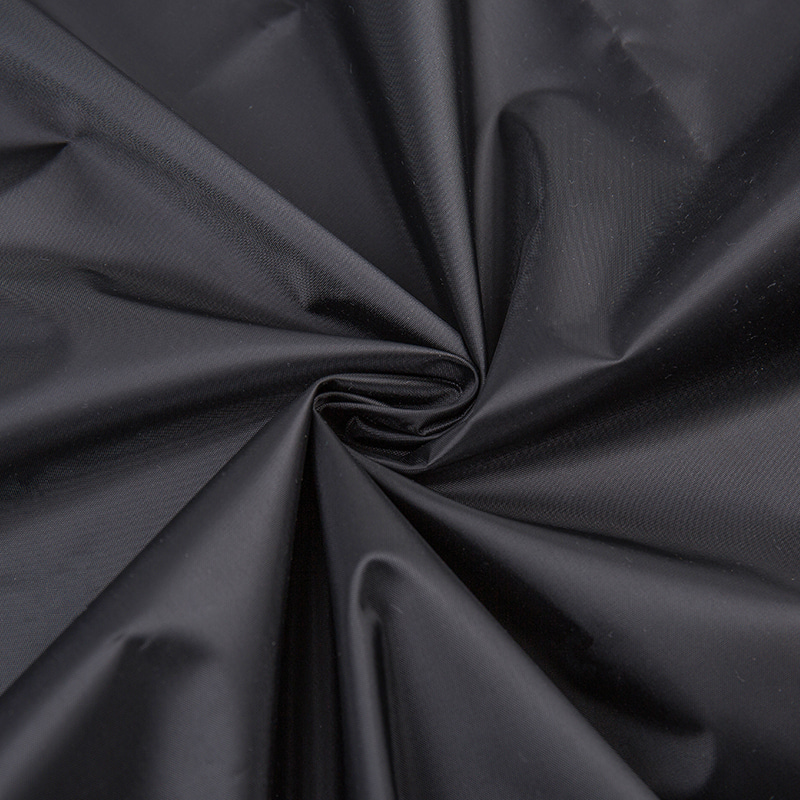
What Do Buyers Need to Know Before Purchasing Four-Way Stretch Polyester Fabric?
 Home / News / Industry news / What Do Buyers Need to Know Before Purchasing Four-Way Stretch Polyester Fabric?
  2026.09.18
 Industry news
Polyester four-way stretch fabric is a performance textile engineered to stretch and recover in both the lengthwise and crosswise directions. For B2B buyers, that dual-direction elasticity is not a cosmetic feature. It determines fit retention, comfort, durability, and the final garment's ability to survive repeated wear and washing. The polyester base adds abrasion resistance, moisture management, and cost stability compared with nylon-heavy or cotton-rich alternatives.
Most commercial versions incorporate 3 to 15 percent spandex or elastane. The polyester content typically ranges from 85 to 95 percent. That balance gives manufacturers a predictable hand feel, controllable shrinkage, and a reliable path to bulk production. When buyers search for polyester four-way stretch fabric, they are usually comparing three things: composition, GSM, and stretch recovery. This guide addresses those variables directly.
A four-way stretch polyester fabric is not simply a fabric that stretches in four directions. It is a fabric system. The knit or woven structure, the elastane ratio, the heat-setting process, and the finishing chemistry all influence whether the final roll performs consistently from the first meter to the ten-thousandth meter. That consistency is what separates a viable wholesale supplier from a sampling-only vendor.
Key takeaway: Four-way stretch is a performance specification, not a marketing phrase. Buyers should request stretch recovery data, not just stretch percentage.
Specification transparency is the fastest way to evaluate whether a supplier can handle a program. The table below summarizes the most common polyester four-way stretch fabric constructions found in wholesale channels. These are representative ranges, not universal standards. Actual values depend on the knitting or weaving method, the elastane type, and the finishing route.
| Composition | Typical GSM | Stretch Direction | Common Structure | Primary Use |
|---|---|---|---|---|
| 85% Polyester / 15% Spandex | 180 to 260 | Four-way | Knitted interlock | Sportswear, swimwear |
| 88% Polyester / 12% Spandex | 160 to 240 | Four-way | Knitted interlock | Leggings, yoga pants |
| 90% Polyester / 10% Elastane | 220 to 310 | Four-way | Woven twill or plain | Stretch suiting, trousers |
| 95% Polyester / 5% Spandex | 140 to 200 | Four-way | Lightweight woven | Outdoor shells, jackets |
GSM, or grams per square meter, is the single most useful weight indicator for buyers. A 140 GSM fabric feels light and packable. A 310 GSM fabric feels substantial and holds structure. The stretch ratio matters just as much. A fabric that stretches 30 percent but recovers only 85 percent will bag out at the knees and elbows. A fabric that stretches 20 percent and recovers 95 percent will hold its shape through repeated wear.
Knitted interlock structures deliver true four-way compression. They are the default choice for leggings, swimwear, and athletic tops. Woven four-way stretch fabrics offer better structural stability, which makes them suitable for trousers, jackets, and uniforms. The trade-off is usually lower stretch percentage and a slightly firmer hand. Buyers should match the structure to the end use, not the other way around.
Buyers who need a specific composition should send a full spec sheet rather than a general inquiry. The more precise the input, the more precise the quotation. A request that includes target GSM, elastane percentage, stretch recovery minimum, and color reference will receive a faster and more accurate response than a message asking for "best price on stretch fabric."
Performance fabric only creates value when it solves a specific garment problem. The applications below represent the highest-volume end uses for wholesale polyester four-way stretch fabric. Each one demands a different balance of stretch, recovery, weight, and hand feel.
This category demands high stretch and high recovery. A fabric that stretches well but recovers poorly will develop knee bagging and waistband roll. The ideal construction is a knitted interlock with 12 to 18 percent spandex and a GSM between 180 and 260. Buyers should request recovery testing after repeated elongation cycles, not just a single stretch measurement.
Polyester offers better chlorine resistance than nylon in pool environments. Combined with four-way stretch, it delivers a snug fit that resists sagging after repeated exposure to water and sunscreen. The typical composition is 85% polyester / 15% spandex, often with a GSM between 180 and 240. Buyers should confirm colorfastness to chlorine and perspiration before committing to a bulk order.
Woven four-way stretch fabrics with a 5 to 10 percent elastane content are common in softshell and shell applications. When laminated with a PU or TPU membrane, they provide waterproof protection without restricting movement. The fabric weight usually falls between 140 and 220 GSM. Buyers should verify the bond strength between the fabric and membrane, as delamination is a common failure point.
Woven four-way stretch fabrics in the 220 to 310 GSM range are used in suits, chinos, and uniforms. The elastane content is typically 5 to 10 percent, which provides enough give for comfort without compromising the fabric's drape. These fabrics are usually finished with anti-wrinkle and moisture-wicking treatments.
Each application carries its own risk profile. A leggings program that fails recovery testing will generate returns. A swimwear program that fails chlorine testing will fade prematurely. A softshell program that fails bond testing will delaminate. Buyers who test against the actual end-use condition, rather than a generic stretch standard, avoid the most expensive sourcing mistakes.
Price is not a single number. It is a function of composition, GSM, stretch ratio, dyeing method, finishing, order quantity, and delivery terms. The ranges below reflect common wholesale quotations for polyester four-way stretch fabric. They are intended as planning benchmarks, not fixed offers.
| Fabric Type | Indicative Price Range | Unit Basis | Notes |
|---|---|---|---|
| Knitted polyester spandex | USD 1.62 to 4.40 | Per meter or kilogram | Varies by composition and GSM |
| Recycled polyester four-way stretch | USD 4.69 to 5.77 | Per yard | Bulk pricing, GRS certified |
| Woven stretch suiting | USD 2.80 to 6.50 | Per meter | Higher GSM, more finishing |
Buyers should treat these ranges as starting points. A 95% polyester / 5% spandex lightweight woven will sit at the lower end. A 85% polyester / 15% spandex high-recovery knit with moisture-wicking and anti-microbial finishing will sit at the upper end. The gap between the lowest and highest quote is usually explained by finishing, certification, and order volume, not by the base fabric alone.
Minimum order quantities for wholesale polyester four-way stretch fabric commonly start at 100 meters or 100 kilograms per color. Some mills support sample yardage as low as 1 meter for development purposes, but the per-unit cost is naturally higher. Buyers should clarify whether the MOQ applies per color, per composition, or per order. A supplier that quotes 100 meters per color may be more flexible than one that quotes 500 meters per order but allows mixed colors.
For a precise quotation, share your target GSM, composition, stretch recovery requirement, color reference, and monthly quantity. A complete specification reduces back-and-forth and shortens the sampling cycle.
Supplier evaluation should go beyond price and lead time. The most reliable indicators are production consistency, testing discipline, and communication speed during the sampling stage. A supplier that responds slowly to a sample request will rarely respond quickly to a bulk production issue.
Ask for evidence of in-house or third-party testing against recognized standards. Stretch recovery can be evaluated using ASTM D3107, which measures the fabric's ability to recover after repeated elongation. Colorfastness to washing, perspiration, and light can be tested under AATCC methods. A supplier that can provide these reports before the first bulk order is a lower-risk partner than one that promises to test later.
Sampling speed is a proxy for operational efficiency. A supplier that can produce a development sample in 7 to 10 days is usually better organized than one that takes 3 to 4 weeks. Buyers should also assess whether the supplier asks clarifying questions. A supplier that accepts a vague specification without question is more likely to deliver a vague result.
Suppliers who regularly export to North America and Europe are more familiar with restricted substance lists, packaging requirements, and documentation standards. That experience reduces the risk of customs delays and compliance failures. Buyers should ask which markets the supplier currently serves and whether the supplier has experience with the buyer's specific certification requirements.
Two-way stretch fabric stretches in one direction, usually crosswise. Four-way stretch fabric stretches both lengthwise and crosswise. Four-way stretch is preferred for garments that require multi-directional movement, such as leggings, swimwear, and athletic tops.
Most four-way stretch polyester fabrics contain 5 to 15 percent spandex or elastane. Higher percentages generally deliver greater stretch and recovery but can increase cost and reduce dimensional stability.
Yes, recycled polyester four-way stretch fabric is available with GRS certification. The recycled content typically comes from post-consumer PET bottles. Buyers should confirm the recycled percentage and the certification scope before specifying recycled content.
Common minimum order quantities range from 100 meters to 100 kilograms per color. Some suppliers support sample yardage as low as 1 meter for development. MOQ terms vary by mill, composition, and finishing requirements.
Provide your target composition, GSM, stretch recovery requirement, color reference, finishing needs, and monthly quantity. A complete specification allows the supplier to return an accurate quotation, usually within one business day.
Most leggings programs use fabric between 180 and 260 GSM. Lighter weights feel cooler but may be less opaque. Heavier weights provide more coverage and compression but can feel warmer.
Request ASTM D3107 testing or an equivalent recovery test after repeated elongation. A fabric that recovers below 90 percent after repeated stretching is likely to bag out in wear. Buyers should test the actual finished fabric, not just a development swatch.
Sourcing polyester four-way stretch fabric is a specification exercise. The clearer the input, the more reliable the output. Buyers who define composition, GSM, stretch recovery, color, finishing, and certification requirements before contacting suppliers will receive faster quotations, fewer sample rounds, and more consistent bulk production.
Send your specification sheet with target GSM, composition, stretch recovery minimum, color reference, and monthly quantity to request a formal quotation.
Recommended Products

Canxing Textile Building, No.458Dongxin Road, Shengze Town, Wujiang District, Suzhou City, Jiangsu Province, China

+86-18816291909

+86-512-63620515

Crystal@canxingtex.com

Copyright © Wujiang Canxing Textile Co,.Ltd. Rights Reserved. Custom Elastic Woven Fabrics Manufacturers
Privacy 苏公网安备32050902101422



 English
 русский
 中文简体
中文简体 عربى
عربى